
Why We Chose the Mandt System®: A Values-Aligned Shift in Our Approach to Positive Behaviour Support
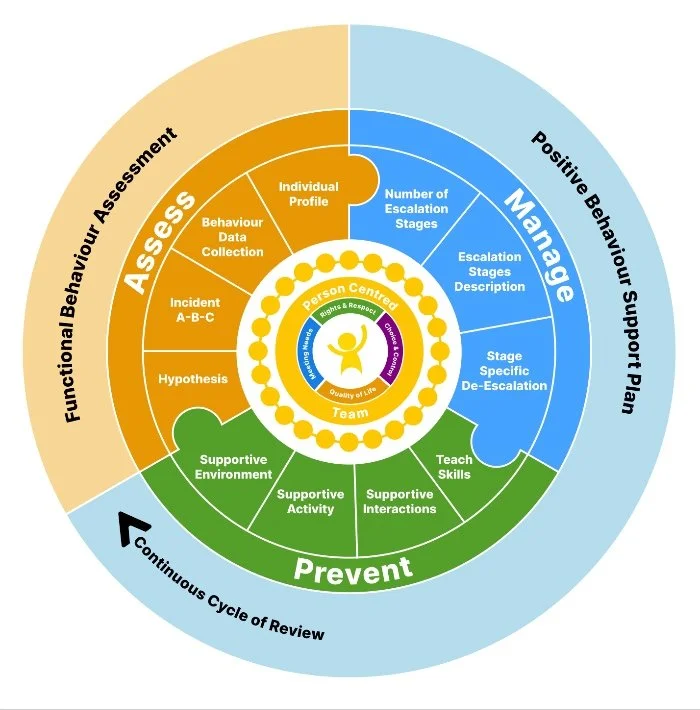
In Positive Behaviour Support (PBS), how we work is just as important as what we do. At Lucid Minds PBS, our role is to support people, families, and frontline teams in ways that are ethical, evidence-informed, and genuinely respectful of human dignity.
Over the past year, we’ve taken a close look at whether our internal training frameworks truly reflected those values in practice. That reflection led us to make a clear decision: to adopt the Mandt System® as a core approach underpinning our Positive Behaviour Support work.
This wasn’t a change driven by trend or compliance alone. It was a values-based decision.
Moving Beyond “Behaviour Management”
Traditional behaviour management models often centre on control, compliance, and reactive responses to crisis. While many are well-intentioned, they can unintentionally drift away from person-centred, trauma-informed practice—particularly when staff are under pressure.
What stood out to us about the Mandt System® was its intentional shift away from control and toward relationship, prevention, and self-regulation.
Mandt reframes the work by asking:
How do we build safety before behaviour escalates?
How do staff regulate themselves so they can co-regulate others?
How do relationships become the primary protective factor?
This aligns strongly with contemporary PBS practice and with the expectations of the NDIS Quality and Safeguards Framework.
A Strong Fit with Positive Behaviour Support
PBS is grounded in understanding behaviour as communication and responding by meeting unmet needs—not by suppressing behaviour. The Mandt System® reinforces this through:
Primary prevention via healthy relationships and respectful communication
Secondary strategies focused on de-escalation and co-regulation
Tertiary responses that emphasise least-restrictive, safety-first physical interventions only when absolutely necessary
Importantly, Mandt positions physical intervention as a last resort, not a core skillset. This mirrors best-practice PBS, where restrictive practices are actively reduced through proactive support and environmental change.
Trauma-Informed in More Than Name
Trauma-informed care is often referenced but not always embedded. What we appreciate about the Mandt approach is that trauma awareness is not an “add-on”—it is foundational.
Mandt explicitly teaches:
The neurobiology of stress and escalation
The impact of trauma on perception and behaviour
The importance of predictability, consistency, and emotional safety
This supports our PBS practitioners to design behaviour support plans that are not only functional, but felt as safe by the person receiving support.
As Mandt says, the goal is for people to be able to say:
“In this place, and with these people, I feel safe.”
That statement resonates deeply with our work.
Supporting the Workforce, Not Just the Individual
One of the strongest reasons we moved toward Mandt is its impact on staff wellbeing and capability.
In PBS, frontline teams are often navigating complex situations with limited preparation. Mandt places equal importance on:
Staff self-regulation
Emotional intelligence
Reflective practice
Post-incident debriefing and learning
This helps reduce burnout, increase confidence, and create more stable support environments—which ultimately benefits the people we support.
What This Means for Our Clients and Partners
By integrating the Mandt System® into our practice, Lucid Minds PBS is strengthening:
The quality and consistency of behaviour support recommendations
The alignment between PBS plans and staff training
Our commitment to reducing restrictive practices
Our focus on dignity, respect, and relational safety
For participants, families, and referring partners, this means behaviour support that is practical, ethical, and deeply human.
Looking Ahead
Adopting the Mandt System® is not about replacing Positive Behaviour Support—it’s about deepening it. It gives our team and the services we work with a shared language, shared values, and shared skills that prioritise safety through connection.
We’re proud to take this step and look forward to continuing to evolve our practice in ways that truly honour the people at the centre of support.
If you’d like to learn more about how Mandt-informed approaches integrate with Positive Behaviour Support, or how Lucid Minds PBS works alongside services to reduce restrictive practices, we’re always happy to connect.